Ask five vendors what POS software costs in Bangladesh and you will get five numbers that cannot be compared: ৳15,000 "lifetime", ৳3,000 on a marketplace listing, ৳1,500 a month per outlet, "sir, package price, let me send a quotation," and one that is free until you need a Mushak 6.3 invoice. None of them are lying. They are quoting different things (a licence, a subscription, a bundle with hardware, or a starter tier) and the only way to know which is cheaper for your shop is to put all of them on the same three-year sheet.
This guide does that. It covers the three pricing models sold here, what each one includes, a realistic first-year bill for a grocery, a pharmacy, a three-outlet supershop, a restaurant, a fashion store and a wholesaler, and where the charges hide that nobody mentions until the invoice arrives. Our own prices are printed in plain taka near the end and on the pricing page. Every market range below is indicative rather than quoted: vendor pricing here moves, and most of it is given privately, so treat these as the shape of the market in August 2026 and not as an offer.
The short answer
As of August 2026, a serious POS system for a single Bangladeshi outlet costs roughly ৳20,000–80,000 as a one-time licence plus 15–25% of that every year for maintenance, or ৳1,000–7,000 per outlet per month on subscription, usually billed a year at a time. Add ৳12,000–55,000 of hardware per counter depending on shop type, which is a separate budget and covered in our POS hardware price guide.
Free tiers exist and are genuinely useful for a first till. They generally stop being enough at the point you need VAT forms, a second outlet or somebody to answer the phone on a Friday. We wrote a whole post on where that line sits: free POS software in Bangladesh.
The three pricing models
1. One-time licence
You pay once, own a copy, and run it on your own PC or a local server. Typical retail licences sit between ৳20,000 and ৳80,000 for a single outlet; marketplace listings start near ৳3,000 for the simplest billing tools and run past ৳1,20,000 for larger builds. Almost all of them carry an annual maintenance contract (AMC) of 15–25% of the licence price, covering updates and support from year two.
Good for: shops that have capital now and want a lower running cost; businesses that must keep data on their own machine; owners who are done growing and want one number.
Watch for: the AMC is where the real cost lives. Skip it to save money and you own a frozen version, then NBR changes a VAT form and you are back at the vendor's desk paying an upgrade fee. Ask in writing whether upgrades are inside AMC or billed on top, and who backs up the machine under your counter.
2. Monthly or yearly subscription
You pay per outlet per month, usually billed a year at a time, and the vendor keeps the system running. Serious cloud or hybrid POS subscriptions here land in the low thousands of taka per outlet per month: realistically ৳1,000–7,000, depending on how much of the business the software covers.
Good for: shops that would rather spend ৳3,500 a month than ৳60,000 today; anyone running more than one outlet; anyone who does not want to think about servers or backups.
Watch for: contract length, what happens to your data if you stop paying, and whether the price is per outlet, per counter, per user or per device, those four words produce very different bills for the same shop.
3. Free and freemium
A free plan, an open-source system you host yourself, or a trial that turns into a quote. Free is real, and for a single counter doing a few dozen bills a day it can carry you for a year. The cost shows up elsewhere: no Mushak 6.3 forms, no multi-outlet, no phone support, caps on products or bills per month, and (with self-hosted open source) a developer you now depend on.
Good for: proving to yourself that you will actually use a POS before you spend money. Watch for: migration. Getting 5,000 products, their batches and a year of sales out of a free tool is the expensive part, and it is not free.
| One-time licence | Subscription | Free / freemium | |
|---|---|---|---|
| Typical BDT (indicative) | ৳20,000–80,000 once | ৳1,000–7,000 /outlet/month | ৳0 |
| Recurring cost | AMC 15–25% of licence per year | The subscription itself | ৳0 until you outgrow it |
| Updates | Usually AMC-gated, sometimes charged | Included | Whatever ships |
| Hosting & backup | Yours | Vendor's | Yours or none |
| VAT form changes | Often a paid upgrade | Should be included | Usually absent |
| Support | AMC tier or per call | Included at some tier | Community or none |
| Second outlet | New licence | Add-on rate per outlet | Usually blocked |
| Cheapest over 3 years | Often yes, on paper | Not usually | Yes, if it still fits |
| Cheapest to be wrong about | No | Yes | Yes |
What a subscription actually buys
The honest case for subscription is not that it is cheaper. Over three years, on a spreadsheet, a one-time licence for one outlet usually is cheaper. The case is what sits behind the monthly number:
- Hosting and backups: a restore path that is somebody's job, rather than a PC under the counter with an external drive nobody has plugged in since Eid.
- Updates without an invoice. When NBR adjusts a Mushak form or a report layout, the change is delivered, not quoted. Our Mushak 6.3 guide explains which forms this affects.
- Security patches, which nobody notices until the day they matter.
- Support with a named channel and a response time, rather than a per-call fee and a WhatsApp number that has changed.
- Continuity: a vendor with recurring revenue has a reason to still be answering in year four. A vendor paid once in 2023 has none.
If a vendor cannot tell you which of those five are inside the monthly price, the monthly price is not a subscription; it is instalments on a licence.
Why per-outlet pricing suits Bangladesh
Most retail here grows one branch at a time. A Mirpur grocery opens a second shop two roads away, then a third in Savar. Two common pricing shapes handle that badly. Flat tiers ("up to 5 outlets, ৳X") punish the chain with two outlets, because it pays the same as the chain with five. Per-user or per-device pricing punishes the shop with three counters and eight staff on rotation; you end up rationing logins, which is exactly how staff start sharing passwords and your audit trail dies.
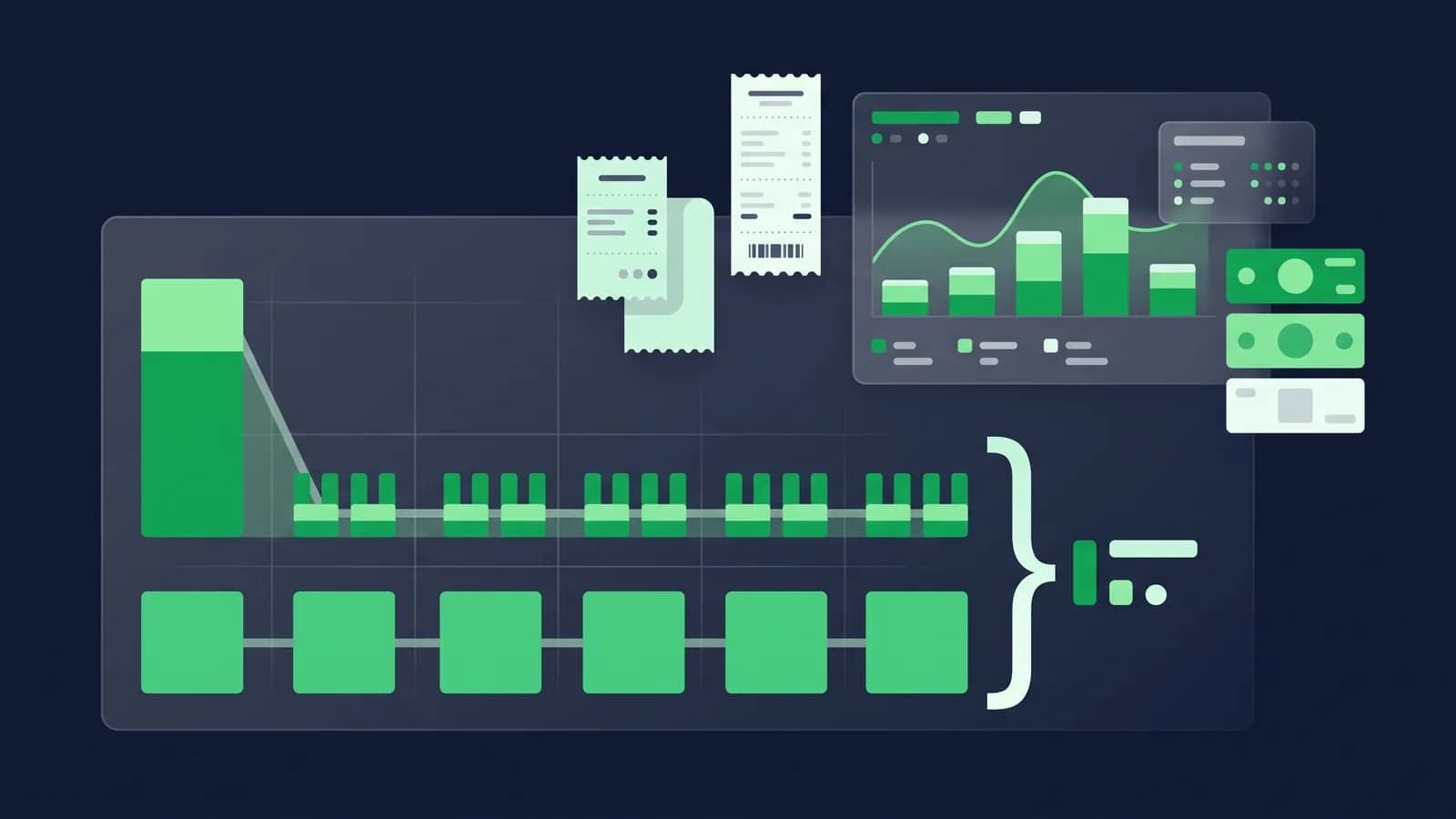
Per-outlet pricing tracks the thing that actually changes as you grow: the number of counters producing revenue. It also makes opening branch three a clean arithmetic question, you know the software line before you sign the lease. It is why our pricing is per outlet per month, and why the second outlet costs less than the first.
Indicative prices by shop type
Market ranges, not our quotes, for one shop of the type described unless stated. Software and hardware are separate budgets. Every figure is indicative, check against live quotes before using these in a plan.
| Shop type | Subscription (per outlet/month) | One-time licence | Hardware, one-off | Indicative first-year total (subscription route) |
|---|---|---|---|---|
| Small grocery, one counter | ৳1,000–2,500 | ৳15,000–35,000 | ৳12,000–20,000 | ৳24,000–50,000 |
| Pharmacy, one counter (batch + expiry) | ৳1,500–3,500 | ৳25,000–60,000 | ৳18,000–28,000 + PC | ৳36,000–70,000 |
| Supershop, 3 outlets, 1–2 lanes each | ৳2,000–5,000 per outlet | ৳80,000–2,50,000 | ৳75,000–2,40,000 | ৳1,47,000–4,20,000 |
| Restaurant or café, one branch with KOT | ৳2,000–5,000 | ৳30,000–80,000 | ৳30,000–55,000 | ৳54,000–1,15,000 |
| Fashion or apparel, one outlet | ৳1,500–4,000 | ৳25,000–65,000 | ৳25,000–35,000 | ৳43,000–83,000 |
| Wholesale / distribution, warehouse + office | ৳3,500–8,000 | ৳50,000–1,50,000 | ৳20,000–40,000 | ৳62,000–1,36,000 |
All ranges are indicative, as of August 2026. Hardware figures come from the August 2026 retail listings in our hardware price guide; software ranges are our reading of publicly advertised prices, and vendors who quote privately may sit outside them.
Two things are worth noticing. The pharmacy pays more than the grocery for the same number of bills, because batch, expiry and FEFO are real engineering, not a checkbox. And the supershop range is enormous, because "3 outlets" can mean three counters or eight: the hardware follows the lanes, not the branches. Fashion and wholesale sit at opposite ends for a different reason: one needs size-colour variants and label printing, the other needs credit ledgers and route sales.
The hidden charges checklist
Print this and read it against every quote. Each line is a real charge somebody in Bangladesh has been billed for.
- [ ] Setup / implementation fee: one-off, often ৳5,000–25,000. Included or not?
- [ ] Data migration: importing your products, opening stock, batches, expiry dates, customers and outstanding dues. Quoted per record by some vendors.
- [ ] Training: how many sessions, on-site or remote, and what a refresher costs after you replace staff.
- [ ] Customisation: an extra invoice format, a report your accountant wants, a field for IMEI. Ask the hourly or per-change rate up front.
- [ ] Annual maintenance charge (AMC): 15–25% of licence value on one-time deals. Starts in year one or year two?
- [ ] Support tier: is support included, or is there a basic/priority split with a per-call or per-incident fee? What is the stated response time, and does it cover Friday and public holidays?
- [ ] Extra user, counter, device or outlet fees: the four different units vendors bill on. Get yours in writing.
- [ ] Hardware markup: some vendors only sell the printer and scanner through themselves. Compare against retail listings; a locked hardware bundle can add 20–40%.
- [ ] Payment integrations: bKash, Nagad or card terminal setup charged separately.
- [ ] Hosting / server: on one-time licences, the PC or server, its UPS and its backup are yours.
- [ ] VAT on the invoice: ask whether the quoted price is VAT-inclusive. On a ৳60,000 licence the difference is thousands of taka, and it is the most common surprise at signing. Confirm the applicable VAT treatment for software and software services with your VAT consultant.
- [ ] Data export / exit fee: what it costs to get your own data out, and in what format.
Budget hardware separately
Bundled quotes are hard to compare because you cannot see which half the money went to. Price them apart. A one-counter grocery kit (80mm thermal printer, 2D scanner, 30 kg scale, 650VA UPS) runs about ৳12,000–20,000 at Star Tech, Ryans or BDStall prices; a restaurant with a kitchen printer and a handheld runs ৳30,000–55,000; a supershop lane with a touch terminal can pass ৳1,00,000. The item-by-item list with current listings is in POS machine and hardware price in Bangladesh, and the devices we are tested against are on the hardware page.
MondayPOS is hardware-agnostic, which matters to the budget in one specific way: buy the printer from whoever is cheapest this week, and reuse the scanner you already own.
Three-year cost: one-time vs subscription, worked
Single outlet, mid-range system, no customisation. Illustrative figures throughout.
| Cost line | One-time licence route | Subscription route (MondayPOS Business, ৳3,500/outlet/mo) |
|---|---|---|
| Year 1: licence or subscription | ৳45,000 | ৳42,000 |
| Year 1: setup / implementation | ৳10,000 | Included |
| Year 1: data migration | ৳8,000 | Included |
| Year 1: training | ৳5,000 | Included |
| Year 2: AMC (20%) | ৳9,000 | n/a |
| Year 2: subscription | n/a | ৳42,000 |
| Year 2: version upgrade for a VAT form change | ৳0–15,000 | Included |
| Year 3: AMC (20%) | ৳9,000 | n/a |
| Year 3: subscription | n/a | ৳42,000 |
| Hosting, backup, server care | Yours (time + a UPS + a drive) | Included |
| Three-year software total | ৳86,000–1,01,000 | ৳1,26,000 |
Read that honestly: for one outlet, the one-time licence is cheaper on the sheet. The extra ৳25,000–40,000 on the subscription side buys hosting, backups, updates you did not have to ask for, support without a per-call fee, and no exposure to the vendor calling your version end-of-life in 2028.
The shape changes when you add outlets, because subscription add-on rates are lower than the first outlet's while a second one-time licence usually is not. And it changes again at the ৳1,500 tier: three years of Lite is ৳54,000, below every one-time route above. Run the table with your own numbers.

How to compare quotes on the same basis
Vendors will not volunteer a comparable number, so ask for one. Send every shortlisted vendor these nine lines and require a taka figure or "৳0, included" against each:
- 1Software cost, year 1, for [your exact outlet and counter count]
- 2Setup and implementation
- 3Data migration for [N] products, [N] customers, opening stock with batches
- 4Training, initial and one refresher
- 5Support: what tier, what response time, what it costs per year
- 6Year 2 cost. Year 3 cost.
- 7Cost to add one more outlet in year 2
- 8Hardware, itemised, or "you buy your own"
- 9VAT: included or extra
Then add the same hardware number to all of them and total three years. That is the only comparison that means anything, and the vendors who fill it in cleanly tend to be the ones who answer the phone later.
What MondayPOS costs, plainly
Published on our pricing page, per outlet per month, in taka, excluding 5% VAT. Pay monthly, or pay yearly in advance:
- Lite: ৳1,500 per outlet/month. A single small shop. ৳18,000 a year on annual billing.
- Business: ৳3,500 per outlet/month, +৳2,450 per additional outlet. POS, sales, purchase, stock and accounting with Mushak 6.3. ৳42,000 a year for one outlet; ৳1,00,800 a year for three, on annual billing.
- Growth: ৳6,500 per outlet/month, +৳4,550 per additional outlet. Business plus CRM, loyalty, HR and payroll. ৳78,000 a year for one outlet, on annual billing.
- Enterprise: custom.
Monthly billing has no minimum term (30 days' notice to cancel) and a one-time installation fee: ৳10,000 on Lite and Business, ৳25,000 on Growth. Annual billing runs for 12 months and waives that fee. Installation covers setup, a standard data import, connecting your hardware, tax and receipt configuration and training. Fees are non-refundable, so book a demo or trial first. Hardware is yours to buy wherever you like, so we add no markup on it. Typical single-outlet setup takes two to four weeks. Anything beyond the standard installation, such as custom integrations or extra training days, is quoted up front.
Questions to ask before you sign
- 1Is this price per outlet, per counter, per user or per device?
- 2What exactly is included in year one, and what is the year-two number?
- 3If it is a one-time licence: what is the AMC, when does it start, and what breaks if I do not renew it?
- 4If NBR changes a VAT form next year, do I get the update, and at what cost?
- 5What does support cost, what is the response time, and is Friday covered?
- 6What does adding one more outlet cost, next year?
- 7Is data migration included, and for how many products and how much history?
- 8Is the quoted price VAT-inclusive?
- 9Am I required to buy hardware from you?
- 10If I leave in year three, how do I export my products, stock, sales and ledger, in what format, and at what cost?
- 11Can you show me the offline billing, the Mushak 6.3 invoice and a bKash payment at the demo, on my own products?
Question 11 is not about price, but it decides whether the price was worth paying. Our 10-system comparison and how to choose a POS go deeper on it.
The bottom line
POS software price in Bangladesh is not one number, and the cheapest quote is rarely the cheapest system. A one-time licence usually wins a single-outlet three-year spreadsheet and loses on updates, backups and continuity. A subscription costs more in total and removes most of the ways this goes wrong. Free is a sensible first step and a bad second year. Whatever you shortlist, price hardware separately, get year-two and year-three numbers in writing, and hold every vendor to the same nine lines.
If you want to skip the quotation stage entirely, our prices are already published: see pricing or book a demo and we will run your own product list through it.
Frequently asked questions
- How much does POS software cost in Bangladesh in 2026?
- Roughly ৳20,000–80,000 as a one-time licence plus 15–25% annual maintenance, or ৳1,000–7,000 per outlet per month on subscription, billed monthly or yearly. Hardware is separate at ৳12,000–55,000 per counter depending on shop type. MondayPOS publishes ৳1,500–6,500 per outlet per month, plus VAT.
- Is a one-time licence cheaper than a monthly subscription?
- For one outlet over three years, usually yes on paper, though once you add the annual maintenance charge the gap narrows, and the licence route excludes hosting, backups and version upgrades. Across multiple outlets the two routes often converge. Build the table with your own numbers.
- What is an annual maintenance charge (AMC) in POS software?
- A yearly fee on one-time licences, typically 15–25% of the licence price, covering updates and support. If you do not renew it, you keep using the version you own but stop receiving fixes and regulatory updates, which matters when a Mushak form changes.
- What hidden costs should I ask about?
- Setup, data migration, training and refreshers, customisation, AMC, support tier and per-call fees, extra user or outlet charges, hardware markup, payment-gateway setup, hosting, VAT on the invoice, and any fee to export your own data when you leave.
- Is free POS software good enough for a small shop in Bangladesh?
- For a single counter with modest volume, often yes for the first year. Free tiers usually lack Mushak 6.3 invoicing, multi-outlet control and paid support, and migrating out later has a real cost. See our guide to free POS software in Bangladesh.
- Does POS software price include hardware?
- Sometimes, and that is a reason to ask for them separately. Bundled quotes hide which half the money went to, and locked hardware can carry a markup over retail. Compare against current listings in our hardware price guide.